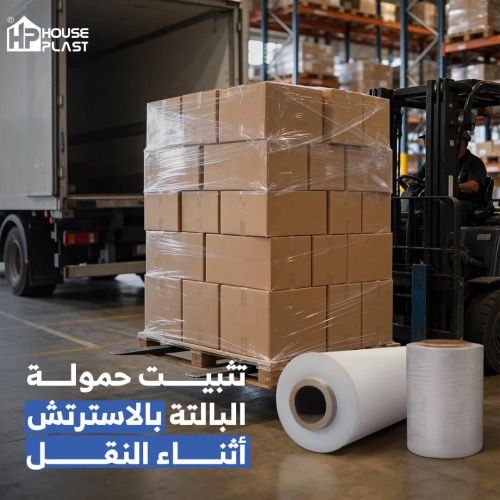
To prevent pallet load shifting or leaning during transit, match the micron thickness and holding force of industrial stretch film to your load weight and profile, lock the bottom carton layer directly to the pallet base during wrapping, maintain a consistent 50% overlap between passes, and secure the top tier without crushing cartons.
In manufacturing plants, warehouses, and export logistics, carton shifting or sliding on a pallet is one of the primary causes of transit damage and delivery delays. In most cases, the issue is not the absence of stretch wrap, but using a film specification mismatched to the load or applying an inconsistent wrapping pattern that loses tension under road vibration and sudden braking.
| Load Type | Primary Transit Risk | Recommended Film Gauge | Wrapping Approach |
| Light, Uniform Cartons | Top-tier sliding under road vibration | Light to medium gauge (15–17 microns) | Progressive bottom-to-top wrap with 50% overlap |
| Medium to Heavy Loads | Load leaning or lower-tier compression | Medium to heavy gauge (20–23 microns) | Reinforced base and mid-section passes with steady tension |
| Irregular or Sharp-Edged Loads | Corner punctures and sudden tension loss | High puncture-resistant gauge (23–30 microns) | Controlled tension over corners with extra wrap layers |
| High-Throughput Packing Lines | Inconsistent tension and film waste in manual wrapping | High-stretch machine-grade film | Calibrated pre-stretch ratio and programmed wrap cycles |
Palletized loads endure continuous lateral forces and vibration from forklift handling through final unloading. Shifting typically occurs due to:
Failing to Lock the Load to the Pallet Base: Wrapping cartons alone without anchoring the bottom passes to the wooden or plastic pallet allows the entire stack to slide as a single block.
Mismatched Micron Thickness: Applying thin film to heavy loads causes gradual stretching and loosening in transit, while over-specifying thick film for light loads increases packaging cost unnecessarily.
Inconsistent Tension During Hand Wrapping: Uneven pull creates loose zones that let cartons shift, whereas excessive tension crushes carton walls and compromises stack stability.
To achieve reliable load containment without excess film consumption, evaluate four practical parameters:
Micron Thickness: Industrial stretch films commonly range from 15 to 30 microns, selected according to total pallet weight and carton rigidity.
Hand vs. Machine Stretch Film: Hand stretch wrap (typically 50 cm width, around 3 kg roll weight) suits flexible warehouse workflows, while machine stretch film (up to 16–17 kg rolls) delivers consistent pre-stretch tension and lower material usage on automated wrappers.
Puncture and Tear Resistance: Essential when wrapping irregular shapes or protruding edges so small nicks do not propagate and snap the web.
Controlled Cling Performance: Ensures film layers bond securely to themselves without requiring extra tape and without sticking adjacent pallets together inside containers.
Even high-performance stretch film depends on disciplined application:
Anchor the Base First: Apply 3 to 4 firm wraps around both the pallet base and the bottom carton row to lock them together.
Wrap Upward with Consistent Overlap: Move steadily upward while maintaining roughly a 50% overlap between passes to distribute containment force evenly.
Reinforce the Mid-Section and Crown: Add 2 to 3 extra wraps around the middle and top tiers to prevent upper cartons from separating during braking or cornering.
Perform a Stability Check Before Loading: Gently push the upper tier by hand before loading to verify the stack moves as one solid unit without shifting.
What micron thickness is best for heavy carton pallets? Medium-to-heavy loads typically require 20 to 23 microns, while irregular or sharp-edged loads often require 25 to 30 microns for added puncture resistance.
When should a facility switch from hand stretch wrap to machine stretch film? Switching makes operational sense when daily pallet volume increases or when consistent containment force, faster throughput, and lower per-pallet film consumption are priorities.
Why does stretch wrap loosen after a few hours of transit even when wrapped tightly? Loosening usually happens when the film gauge is too light for the load weight or lacks sufficient elastic recovery, allowing the film to stretch permanently under continuous load pressure.
Preventing pallet load shifting during transit relies on pairing the right industrial stretch film gauge and grade with a wrapping method that anchors the base and stabilizes upper tiers. House Plast supplies hand and machine stretch film solutions built to support warehouse efficiency and safe shipment delivery.
Product News

Product News
Product News
Custom Printed Packaging Tape: How to Ensure Print Clarity After Use To keep a printed logo...
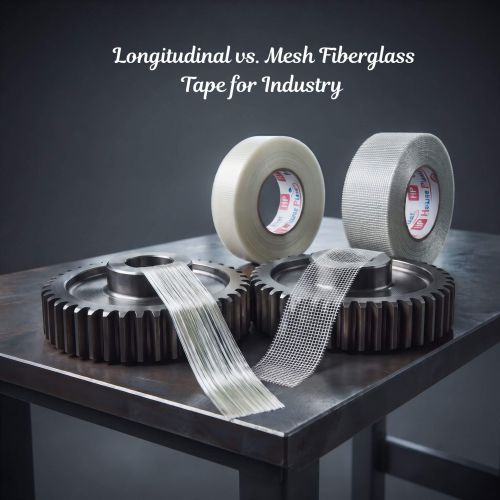
Read MoreLongitudinal vs. Mesh Fiberglass Tape: Choosing the Right Strapping for Industrial Parts Direct...
Read MoreColored Carton Sealing Tapes: How to Streamline Sorting Grades, Flavors, and QC Hold Shipments In...
Read MoreExhibition Carpet Installation with Mesh Double-Sided Tape: Ensuring Event Stability and Clean...
Read Moreدبل فيس شبكي من هاوس بلاست صعب القطع . عايز دبل فيس قوي ويتحمل معاك اصعب الظروف؟ نحب نعرفك إننا...
Read Moreسلوتيب شفاف ٦٠٠ متر ، للتغليف الاوتوماتيكي . ٦٠٠ متر فعلي لتغطيه كل احتياجات خط انتاجك باقوي...
Read More English
 العربية